Printable logic puzzles
Nine brain teasers where everything can be worked out: nothing is left to chance, and there is one solution per grid. Sudoku, takuzu and futoshiki are played with digits or symbols, kakuro and calcudoku with sums and arithmetic, hashi and nurikabe with islands, slitherlink with a loop to draw, nonograms with cells to fill in. Each generator builds fresh grids, from easy to hard, and packs them into a print-ready PDF with the solutions at the end. Compare them in the table below, then open the one that appeals to you.
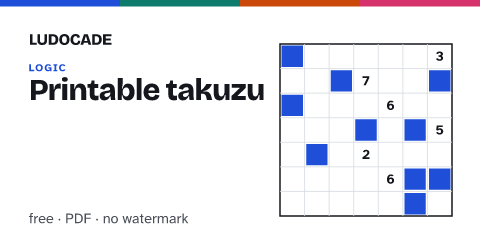 Takuzu3 levels, solutions includedGenerate
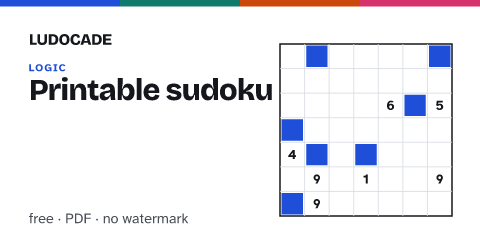 Sudoku3 levels, 2 grids per pageGenerate
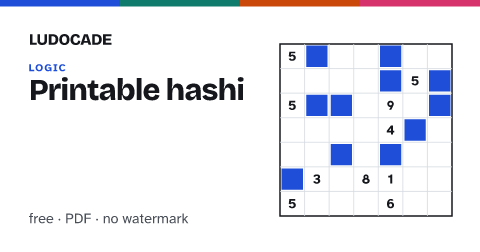 Hashi3 levels, solutions includedGenerate
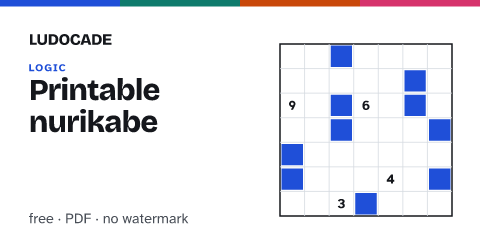 Nurikabe3 levels, solutions includedGenerate
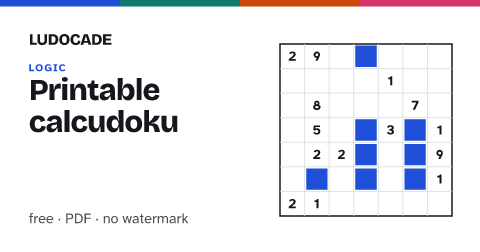 Calcudoku3 sizes, 3 levels, solutions includedGenerate
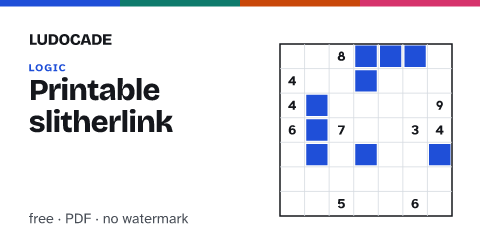 Slitherlink3 sizes, 3 levels, solutions includedGenerate
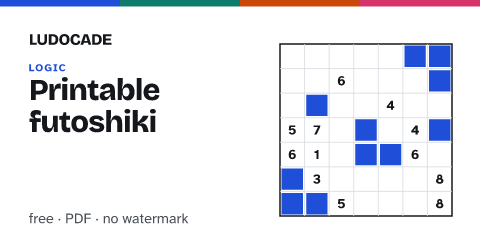 Futoshiki4 sizes, 3 levelsGenerate
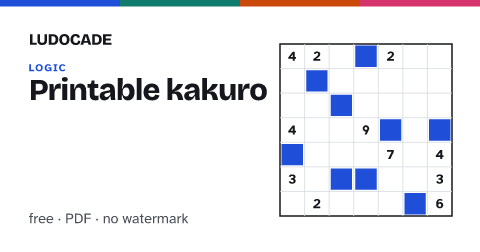 Kakuro3 sizes, 3 levelsGenerate
 Nonograms3 sizes, 3 levelsGenerate
Which one to choose?
Times for takuzu, nurikabe and nonograms are those on the game pages; the sudoku, hashi, kakuro, futoshiki, calcudoku and slitherlink times, like the ages, are rough guides. You will get faster with practice.
| Game | From age | Time per grid | Levels or sizes | Grids per page | Solutions |
|---|---|---|---|---|---|
| Sudoku | 8 | 5 to 30 min | 3 levels, 9 × 9 grid | 2 | at the end, 4 per page |
| Takuzu | 7 | 5 to 20 min and more | 6 × 6, 8 × 8 or 10 × 10 | 4 | at the end |
| Nurikabe | 10 | 5 to 20 min and more | 5 × 5, 6 × 6 or 7 × 7 | 4 | at the end |
| Calcudoku | 7 | 5 to 20 min | 4 × 4, 5 × 5 or 6 × 6, 3 levels | 4 or 6 | at the end |
| Futoshiki | 7 | 5 to 30 min | 4 × 4 to 7 × 7, 3 levels | 6 or 4 | at the end |
| Slitherlink | 9 | 5 to 30 min and more | 5 × 5, 7 × 7 or 10 × 10, 3 levels | 4 or 6 | at the end |
| Kakuro | 10 | 5 to 40 min | 6 × 6, 8 × 8 or 10 × 10, 3 levels | 4 or 2 | at the end, 4 per page |
| Hashi | 9 | 5 to 20 min | 7 × 7, 9 × 9 or 11 × 11 | 4 | at the end |
| Nonograms | 8 | 5 min to 1 h | 10 × 10, 15 × 15 or 20 × 20, 3 levels | 1 | at the end, 4 per page |
Frequently asked questions
Which game should an 8-year-old start with?
Easy 6 × 6 takuzu: there are only two symbols and three simple rules. Then move on to easy sudoku or a 10 × 10 nonogram, which ask for a bit more patience but remain within reach from age 8.
What is the difference between takuzu and nonograms?
Takuzu is filled completely with circles and squares, following rules about repeats and balance. A nonogram only asks you to fill some cells, based on the numbers written on the left and above, and a picture appears.
Are the grids different every time?
Yes. Every grid is generated on demand, and the “Another set” button builds new ones. Each has a single solution, checked by our solver, so you can always solve it by deduction.
Can I print the solutions separately?
Yes. The solutions are grouped on the last pages of the PDF: print the grids first, then only the solution pages if you need them. For sudoku and nonograms, the solutions page even reminds you to print it separately.
Which game if I like to think for a long time?
A 20 × 20 nonogram takes about an hour, and a hard takuzu 20 minutes and more. An 11 × 11 hashi and a 7 × 7 nurikabe mostly call for method: you move forward through small deductions that chain together.